Holt tractor''?
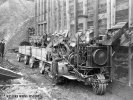
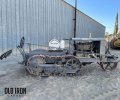
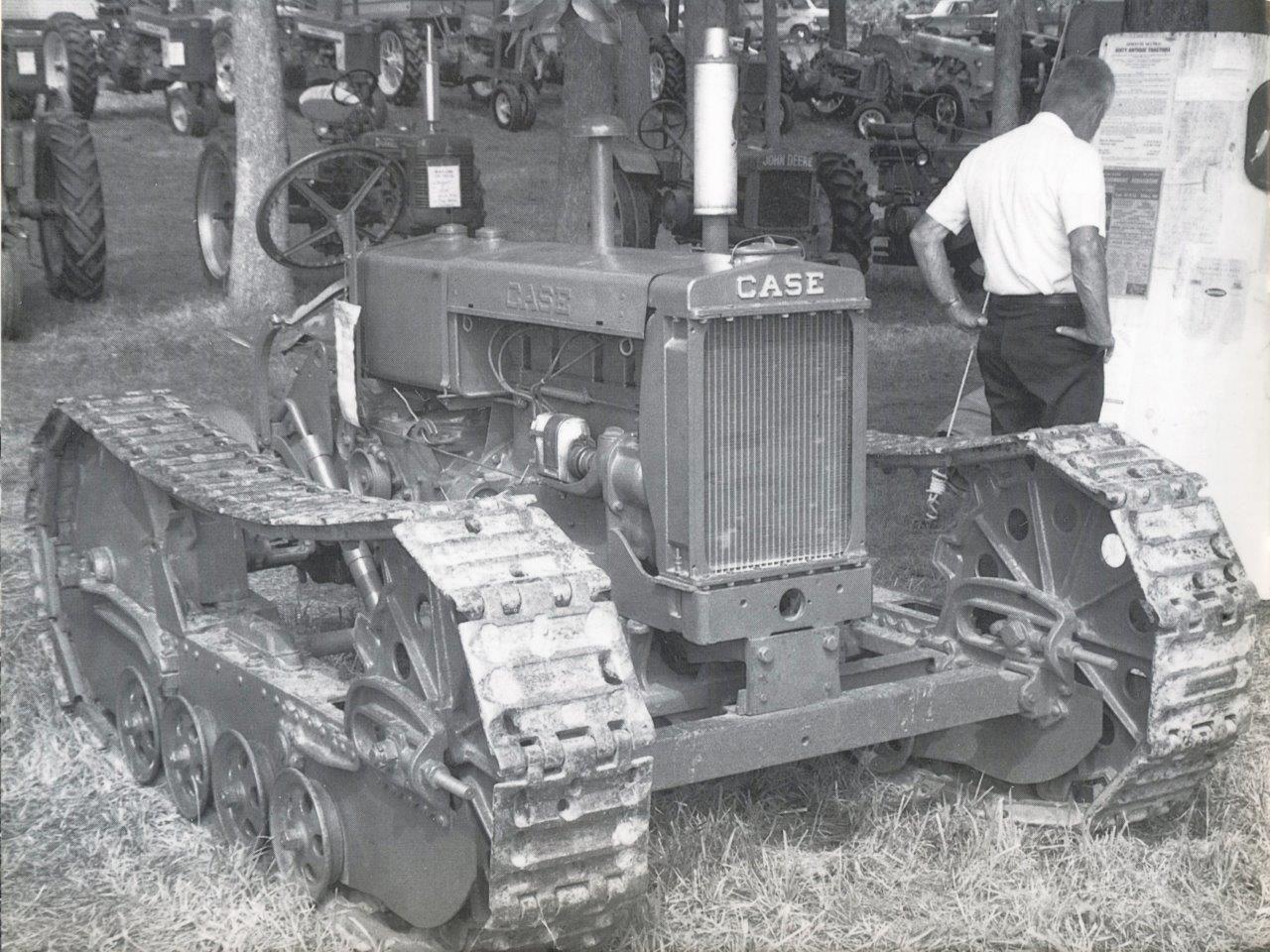
The history of tracked vehicles begins with Benjamin Holt and the beginning of the last century. While this American inventor is credited with the first prototype of a commercial tracked tractor, we owe it to the Italian company FIAT, along with Caterpillar, that we are indebted for the development of the technology that made them essential in a wide variety of sectors. We asked Lorenzo Fermi, whose father already worked on Caterpillar machines, for information on today's tracks and their strategic role in any earthmoving or material handling job.
How has track technology evolved?
"Although conceptually they are no different from those of the early days, modern construction solutions today ensure increasingly reliable tracks, made from top-quality materials and capable of operating virtually anywhere. There are three specific variants to choose from depending on the work environment: the more traditional iron tracks, rubber tracks, or hybrid solutions with overpads for the former."
How do you know which is best?
Iron tracks are generally recommended for wooded areas and steep terrain, where the surface tends to be damp, slippery, or alternating between hard and softer, more slippery elements. Otherwise, on asphalt and flat areas in construction environments, rubber tracks are undoubtedly the best performers. Excellent vulcanization and specific compounds ensure long life, and thanks to advanced materials chemistry, they resist both scorching temperatures and the harsh winter weather. They even resist the vast majority of solvents. Perfect for small or medium-sized excavators, rubber tracks now represent almost all requests for new equipment and are the norm for rental supplies. Finally, one of the advantages of rubber tracks shouldn't be underestimated: its weight is particularly low compared to the 'monstrous' weight of iron tracks.
Then there's the option of over-pads...
"Exactly. Practical and efficient, they add all the agility and functionality of rubber to the already excellent grip of steel. Installation is extremely simple: simply bolt them onto the track (often to just one link in two), and thanks to recent quick-release clip systems, installation has become even easier. Anyone can do it themselves.
What maintenance or care is required to ensure the tracks are always in good condition?
"During routine maintenance, in addition to greasing and changing filters, the operator simply needs to use the belt tensioner. A track should never be too tight or too loose, and to ensure the correct level of tension, simply refer to the tolerance guidelines we provide at each service. By operating a small valve that can be tightened or loosened, the links are adjusted to the optimal distance. Finally, among the recommendations I can offer is to check the inside of the tracks, the side that runs on the drive wheels. If the outside can be damaged by impact or material, its wear may at most cause a little extra vibration. This isn't a big deal given the excavator's low speed. Conversely, if the wear occurs on the inside, due to one or more links being too loose, the track could fail.
And what if this were to happen?
"Since we can only operate on a fixed rotation, in many cases this would mean a machine downtime that would jeopardize the continuation of the worksite. However, with the excavator's own arm or the help of a second vehicle, this is something that fortunately can be resolved fairly quickly. The same applies to those who rely on our on-site service, which is now accustomed to providing prompt interventions of this type. However, the loss of a track clearly highlights the importance of proper preventative maintenance."
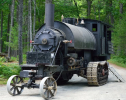
Holt had invented a steam-powered tractor to allow farmers to be more productive for longer and at a lower cost than horsepower. Holt was a prolific inventor and held more than 45 patents. The residents of Stockton, California, called him "Uncle Ben."
C.L. Best, for his part, had launched a small startup called the C.L. Best Gas Traction Co., which initially focused on making rubber-tired tractors. By the end of 1912, Best had a tracklayer ready for production, the C.L. Best Model 70, equipped with an engine designed by Best himself. Best's products soon began to be accompanied by the "Tracklayer Creed."
Holt had invented a steam-powered tractor to allow farmers to be more productive for longer and at a lower cost than horsepower. Holt was a prolific inventor and held more than 45 patents. The residents of Stockton, California, called him "Uncle Ben."
C.L. Best, for his part, had launched a small startup called the C.L. Best Gas Traction Co., which initially focused on making rubber-tired tractors. By the end of 1912, Best had a tracklayer ready for production, the C.L. Best Model 70, equipped with an engine designed by Best himself. Best's products soon began to be accompanied by the "Tracklayer Creed."