• Thank you for visiting HeavyEquipmentForums.com! Our objective is to provide industry professionals a place to gather to exchange questions, answers and ideas. We welcome you to register using the "Register" icon at the top of the page. We'd appreciate any help you can offer in spreading the word of our new site. The more members that join, the bigger resource for all to enjoy. Thank you!

What screwdriver do I need?

Little_Grizzly

Well-Known Member
Joined
Sep 9, 2016
Messages
67
Location
California
I believe the problem is I didn’t have the right security bit yet to disconnect the connector before trying to remove the pin. I only get weekends to work on things. Couldn’t let the weekend go by without at least tying. I have the right bit now. It will be two weeks before I can take another crack at it. I’m sure I can get the pin out once I have the connector separated.

Also if you look at the picture, you’ll see there isn’t much wire to grab and pull on. With the connector separated I can push from the other side.
 

Nige

Senior Member
Joined
Jun 22, 2011
Messages
38,614
Location
G..G..G..Granville.........!! Fetch your cloth.
There is a “technique” for using the extractor tool. Basically what you are attempting to do is lift two “fingers/hooks” inside the connector to free the socket and allow it to be pulled out of the connector. As I think I mentioned before there are videos on YT showing the process. You really should take a look at them but here are my tips.

1. Push the wire into the connector as far as it will go, which is not much, but it should free up the two fingers inside the connector a tad and make it easier to insert the extractor tool. You may have to move the wire slightly in and out of the connector to find the sweet spot for relieving pressure on the fingers.

2. Under no circumstances attempt to rotate the extractor tool while attempting to free a wire. It WILL break. If the socket is not releasing from the connector, remove the tool and rotate it by 90 degrees then try inserting it again. Patience is the order of the day.


Little_Grizzly

Well-Known Member
Joined
Sep 9, 2016
Messages
67
Location
California
Thanks for the tips Nige. I practiced for about 30 minutes on an old harness I removed previously. It does take some “feel” but I got to the point where I could extract the pin each time on the first go. I didn’t push the wire in first, but I’m betting that is a great tip.

One question I have is why use the plastic version of the tool. I have both the plastic one and the metal one. The metal one seems way easier to me. I broke a couple of the plastic ones before I had it figured out. Seems like the metal one is a more durable solution. Am I missing something?
 

Cmark

Senior Member
Joined
Jan 2, 2009
Messages
3,364
Location
Australia
I actually meant what's the problem you're having unpinning the connector. As Nige wrote, push the wire in first and go gently. You may also find a little silicone spray lube helpful. Long nose pliers to grab the stumpy wires. I reiterate that unpinning it while connected should not be any problem.

The metal tool is ok but the plastic fingers inside the connector can be damaged. Better to damage a tool that write off a connector, IMO.
 

Little_Grizzly

Well-Known Member
Joined
Sep 9, 2016
Messages
67
Location
California
Well I guess the only “problem” I have is the wires will not pull out! Not sure what other problems there might be haha. The tools insert fine although I didn’t try to push the wires in while inserting the tool. Perhaps having the connector mated is making it difficult to push the pin any deeper. When I get back onsite I’m going to un-mate the connector. That should make things easier. I can also then push from the other side of the pin.
 

LCA078

Senior Member
Joined
Sep 29, 2019
Messages
728
Location
Austin, TX
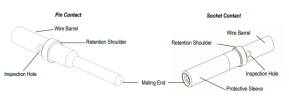
I thought the process for removing the male pins was slightly different than removing the female sockets? Isn't there a wedge lock holding the female sockets in place that needs to be removed before that socket can be extracted out the back? I don't think we confirmed if he's working on the pin or socket side of the connector...or did I miss it?
 

Nige

Senior Member
Joined
Jun 22, 2011
Messages
38,614
Location
G..G..G..Granville.........!! Fetch your cloth.
I thought the process for removing the male pins was slightly different than removing the female sockets? Isn't there a wedge lock holding the female sockets in place that needs to be removed before that socket can be extracted out the back? I don't think we confirmed if he's working on the pin or socket side of the connector...or did I miss it.
There is no wedge in a 70-pin connector. Only connectors up to 12 pins contain wedges, the larger ones don’t. They have the two previously-mentioned fingers inside each tube where a pin/socket is installed.

In this particular case it is sockets that are being removed from the ECM connector, not pins. However if it was pins the removal procedure using the tool would still be exactly the same. Check out the video I linked above. I know it’s a circular connector not a rectangular one but the terminal removal procedure is the same.
 
Last edited:

LCA078

Senior Member
Joined
Sep 29, 2019
Messages
728
Location
Austin, TX
Thanks, Nige. As you can tell, I've only had to repair the smaller connectors and never an ECM one. Let's hope it stays that way for a while....
 

Zewnten

Senior Member
Joined
Apr 2, 2018
Messages
673
Location
Earth
Thanks for the tips Nige. I practiced for about 30 minutes on an old harness I removed previously. It does take some “feel” but I got to the point where I could extract the pin each time on the first go. I didn’t push the wire in first, but I’m betting that is a great tip.

One question I have is why use the plastic version of the tool. I have both the plastic one and the metal one. The metal one seems way easier to me. I broke a couple of the plastic ones before I had it figured out. Seems like the metal one is a more durable solution. Am I missing something?
Thd metal version can damage the fingers and the connector will no longer seat. Rh plastic does not have this issue
 

Cmark

Senior Member
Joined
Jan 2, 2009
Messages
3,364
Location
Australia
Very interesting. Deutsch DRB series. There's nothing I can find in SIS that mentions them, although the part numbers are there.
Thanks for the update.
 
Top