-
Thank you for visiting HeavyEquipmentForums.com! Our objective is to provide industry professionals a place to gather to exchange questions, answers and ideas. We welcome you to register using the "Register" icon at the top of the page. We'd appreciate any help you can offer in spreading the word of our new site. The more members that join, the bigger resource for all to enjoy. Thank you!
You are using an out of date browser. It may not display this or other websites correctly.
You should upgrade or use an alternative browser.
You should upgrade or use an alternative browser.
More rare birds!
- Thread starter Hjolli
- Start date
DaveC
Member
Hi there,
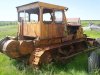
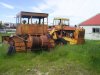
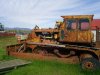
The Dozer type in your photo is a British built Challenger 3. Taking a more in depth peek at the engine it very much looks like a later production model of this type as it has either the 9.6 Liter Leyland 0.600 or perhaps an 11.3 Liter Leyland 0.680, both are outwardly similar. The early versions were powered by a British Meadows engine of similar horsepower as the Leyland. Hope this is of help and by the way, nice photos.
Regards,
DaveC:
The Dozer type in your photo is a British built Challenger 3. Taking a more in depth peek at the engine it very much looks like a later production model of this type as it has either the 9.6 Liter Leyland 0.600 or perhaps an 11.3 Liter Leyland 0.680, both are outwardly similar. The early versions were powered by a British Meadows engine of similar horsepower as the Leyland. Hope this is of help and by the way, nice photos.
Regards,
DaveC:
DaveC
Member
Hi hjolli, I do not know the exact start and finish of production of the Fowler Challenger 3 but I do know it was during the 50`s decade. The Fowler Challenger 3 was replaced by the Challenger 33 and built from the late 50`s through to the late 60`s. Fowler also built Machines from the Challenger 1 which is around D4 size Challenger 3, as mentioned, D6 size, Challenger 4 was in between D7/D8 size of that era. I would estimate that the 33 model was equivelent to the D6/D7. Hope this is of help.
Regards,
Dave:
Regards,
Dave:

egoman
Well-Known Member
- Joined
- Nov 13, 2007
- Messages
- 87
- Location
- rosser manitoba canada
- Occupation
- pipeline and heavy industrial pipefitter
It actually looks like its in good shape.Are you going to buy it?

OzDozer
Senior Member
DaveC's info is pretty good .. it does appear a late model Challenger MK III, as it's fitted with either a 600 or 680 Leyland (as the later Challenger 33 was) ..
According to my info, the Leyland powered Challenger 33 did not appear until 1962, and was built until 1974.
The Meadows-engined Fowler Challenger MK III was produced from 1950 to around 1956, when the Meadows engine was superseded by the Leyland.
The Meadows powered Challenger MK III was rated at 95 BHP, and the 680-Leyland-powered Challenger 33 was 125 BHP.
I have a figure that says the Leyland powered Challenger MK III was 109 BHP, an improvement on the Meadows. Perhaps the initial Leyland offering in the MK III was a Leyland 600 engine, with the 680 appearing in the Challenger 33.
The Challenger MK III weighed 23,600 lbs (10,700 kg) and the Challenger 33 weighed 28000 lbs (12,700 kg).
It appears some Challenger 33's were also fitted with Gardner 6LW engines. This may have been a factory option.
Here is the short history of Fowler and its associate, Marshall ..
John Fowler was the designer of successful steam ploughing engines in the mid-1850's, and the company he founded, went on to become a huge name, and a powerful company involved in the manufacture of steam traction engines, ploughing equipment and railway equipment, from the late 1850's to around the mid-1920's .. despite the fact that John Fowler tragically died from tetanus, from a fall from his horse, in a hunting accident on 1864.
Fowler steam traction engines were superb products and sales of them, were made worldwide.
Fowler stuck with steam for far too long, and were in trouble by the early 1920's. At that time, they were building steam powered road rollers, railway equipment, ploughing equipment, and trying to produce oil or diesel driven equipment to replace the dying sales of steam traction engines. They built a "Diesel Motor Tackle", an unusually large diesel tractor, that appears to have been doomed by poor sales and the Great Depression.
In 1927, Fowler built the Gyrotiller .. a huge tiller-wheel tracked machine with a very large rotary tiller on the rear, that was very popular in the canefields around the world. The first 4 were gasoline powered, the later ones were powered by a 127 BHP MAN diesel.
Fowler relied on the Gyrotiller, some small amount of steam engine sales, and railway equipment sales, to keep going, until WW2 commenced in late 1939, when they turned to War Production.
Fowler built their last steam ploughing tackle in 1936, and their last steam traction engine in 1938.
Fowler had produced some diesel crawlers during this inter-Wars period .. the 3-30 in 1934 (34 BHP) .. then the 4-40 (45 BHP), the 10-70 (70 BHP), and the Model 80 (80 BHP) .. all of these, in early 1939 ..
The Gyrotiller and the crawler tractors ceased production in late 1939, at the time the factory turned to War production.
In 1946, all War production contracts were cancelled on the spot, and John Fowler & Co were in big trouble.
In 1945, Fowler had produced a new design of crawler tractor, in two models .. the FD-2 at 28 BHP and the FD-3 at 35 BHP.
In 1947, John Fowler & Co were purchased by T.W. Ward, who owned Howard Rotary Hoes Ltd, and Marshall, Sons & Co, Ltd.
The two companies were merged to form Fowler-Marshall Ltd, and they both then produced complementary lines of equipment .. with Fowlers of Leeds producing crawlers and Marshalls of Gainsborough, producing both crawlers and wheeltractors.
The Marshall factory initially produced Challenger crawlers, and Field-Marshall wheeltractors .. then in 1956, changed their crawler lineup to Track-Marshall crawlers.
Fowlers first product after the merger was the single-horizontal-cylinder, Fowler VF (40 BHP) .. then the improved VFA .. then the 95 BHP Challenger MK III in 1950.
Marshalls then produced the now-rare Challenger MK I, a twin cyl, supercharged 2 stroke, rated at 50 BHP, in 1952.
This was followed by the Fowlers Challenger 4 .. basically a re-engined MK III fitted with a 6 cyl, 150 BHP Meadows engine, of 970 cu ins. This engine was so huge, it had a gasoline starting engine, a-la Caterpillar. However, electric start was also offered.
The Fowler Challenger 2 was introduced in 1955, powered by a 65 BHP Meadows engine. This tractor became the Fowler 22 in 1957, when fitted with a 6 cyl Leyland UE350.81 engine.
From 1955, the new line of Track Marshall tractors from Marshall were all fitted with Perkins engines.
The last Fowler crawlers were built in 1974 .. upon the merger of Aveling and Fowler-Marshall, to form Aveling-Marshall .. when the entire Fowler line was dropped in favor of the Track Marshall line.
According to my info, the Leyland powered Challenger 33 did not appear until 1962, and was built until 1974.
The Meadows-engined Fowler Challenger MK III was produced from 1950 to around 1956, when the Meadows engine was superseded by the Leyland.
The Meadows powered Challenger MK III was rated at 95 BHP, and the 680-Leyland-powered Challenger 33 was 125 BHP.
I have a figure that says the Leyland powered Challenger MK III was 109 BHP, an improvement on the Meadows. Perhaps the initial Leyland offering in the MK III was a Leyland 600 engine, with the 680 appearing in the Challenger 33.
The Challenger MK III weighed 23,600 lbs (10,700 kg) and the Challenger 33 weighed 28000 lbs (12,700 kg).
It appears some Challenger 33's were also fitted with Gardner 6LW engines. This may have been a factory option.
Here is the short history of Fowler and its associate, Marshall ..
John Fowler was the designer of successful steam ploughing engines in the mid-1850's, and the company he founded, went on to become a huge name, and a powerful company involved in the manufacture of steam traction engines, ploughing equipment and railway equipment, from the late 1850's to around the mid-1920's .. despite the fact that John Fowler tragically died from tetanus, from a fall from his horse, in a hunting accident on 1864.
Fowler steam traction engines were superb products and sales of them, were made worldwide.
Fowler stuck with steam for far too long, and were in trouble by the early 1920's. At that time, they were building steam powered road rollers, railway equipment, ploughing equipment, and trying to produce oil or diesel driven equipment to replace the dying sales of steam traction engines. They built a "Diesel Motor Tackle", an unusually large diesel tractor, that appears to have been doomed by poor sales and the Great Depression.
In 1927, Fowler built the Gyrotiller .. a huge tiller-wheel tracked machine with a very large rotary tiller on the rear, that was very popular in the canefields around the world. The first 4 were gasoline powered, the later ones were powered by a 127 BHP MAN diesel.
Fowler relied on the Gyrotiller, some small amount of steam engine sales, and railway equipment sales, to keep going, until WW2 commenced in late 1939, when they turned to War Production.
Fowler built their last steam ploughing tackle in 1936, and their last steam traction engine in 1938.
Fowler had produced some diesel crawlers during this inter-Wars period .. the 3-30 in 1934 (34 BHP) .. then the 4-40 (45 BHP), the 10-70 (70 BHP), and the Model 80 (80 BHP) .. all of these, in early 1939 ..
The Gyrotiller and the crawler tractors ceased production in late 1939, at the time the factory turned to War production.
In 1946, all War production contracts were cancelled on the spot, and John Fowler & Co were in big trouble.
In 1945, Fowler had produced a new design of crawler tractor, in two models .. the FD-2 at 28 BHP and the FD-3 at 35 BHP.
In 1947, John Fowler & Co were purchased by T.W. Ward, who owned Howard Rotary Hoes Ltd, and Marshall, Sons & Co, Ltd.
The two companies were merged to form Fowler-Marshall Ltd, and they both then produced complementary lines of equipment .. with Fowlers of Leeds producing crawlers and Marshalls of Gainsborough, producing both crawlers and wheeltractors.
The Marshall factory initially produced Challenger crawlers, and Field-Marshall wheeltractors .. then in 1956, changed their crawler lineup to Track-Marshall crawlers.
Fowlers first product after the merger was the single-horizontal-cylinder, Fowler VF (40 BHP) .. then the improved VFA .. then the 95 BHP Challenger MK III in 1950.
Marshalls then produced the now-rare Challenger MK I, a twin cyl, supercharged 2 stroke, rated at 50 BHP, in 1952.
This was followed by the Fowlers Challenger 4 .. basically a re-engined MK III fitted with a 6 cyl, 150 BHP Meadows engine, of 970 cu ins. This engine was so huge, it had a gasoline starting engine, a-la Caterpillar. However, electric start was also offered.
The Fowler Challenger 2 was introduced in 1955, powered by a 65 BHP Meadows engine. This tractor became the Fowler 22 in 1957, when fitted with a 6 cyl Leyland UE350.81 engine.
From 1955, the new line of Track Marshall tractors from Marshall were all fitted with Perkins engines.
The last Fowler crawlers were built in 1974 .. upon the merger of Aveling and Fowler-Marshall, to form Aveling-Marshall .. when the entire Fowler line was dropped in favor of the Track Marshall line.
Thanks a lot for your good information OzDozer.
This machine is/was apparently owned by an earthmoving contractor in Southern Iceland, that contractor is still in business, but I don´t know when they used this one for the last time.
I wonder how these machined faired as compared to Cat or IH of that period.
Regards, H
This machine is/was apparently owned by an earthmoving contractor in Southern Iceland, that contractor is still in business, but I don´t know when they used this one for the last time.
I wonder how these machined faired as compared to Cat or IH of that period.
Regards, H

Phil
Senior Member
- Joined
- May 2, 2005
- Messages
- 1,067
- Location
- Southeastern Ontario
- Occupation
- retired operator and mechanic
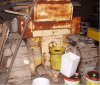
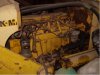
Very nice pictures. A glimpse of the countryside too. I posted these pictures on acmoc once although it's not a Cat. I'm thinking seriously of buying this machine and the owner and I are close on a price. It's in a barn with the engine and one track is seized. The blade goes with it. Apparently it worked for a short time after he unloaded it from a container from England. Then the engine seized. Apparently if traveling across a hill the machine will not go straight as a Cat . I'm going back to look at it in April.Phil
. I'm going back to look at it in April.PhilAttachments
DaveC
Member
Phil, that looks like a UK builtTrack Marshall 55 Series Machine. The engine in the photo appears to be a Perkins 6.354 6 pot engine. "6" meaning 6 cylinder "354" is the size in cu-inch ratings which is 354 cu-inch. I cannot think of another engine type that positions the CAV DPA Rotary Injection Pump in the upright position. Bits to repair the Perkins 6.354 are easy to come by here in the UK, dunno about your place though?? Hope I have helped a bit? Cheers, DaveC
Phil
Senior Member
- Joined
- May 2, 2005
- Messages
- 1,067
- Location
- Southeastern Ontario
- Occupation
- retired operator and mechanic
Thanks DaveC for the reply,
These machines are very very hard to find in Ontario. I've driven all over the province and this is the first one I've seen. Must be more plentiful where you are. I hope to reach a deal this spring and I will post pictures of the trip home. Phil
These machines are very very hard to find in Ontario. I've driven all over the province and this is the first one I've seen. Must be more plentiful where you are. I hope to reach a deal this spring and I will post pictures of the trip home. Phil